Mile 163 Government Road
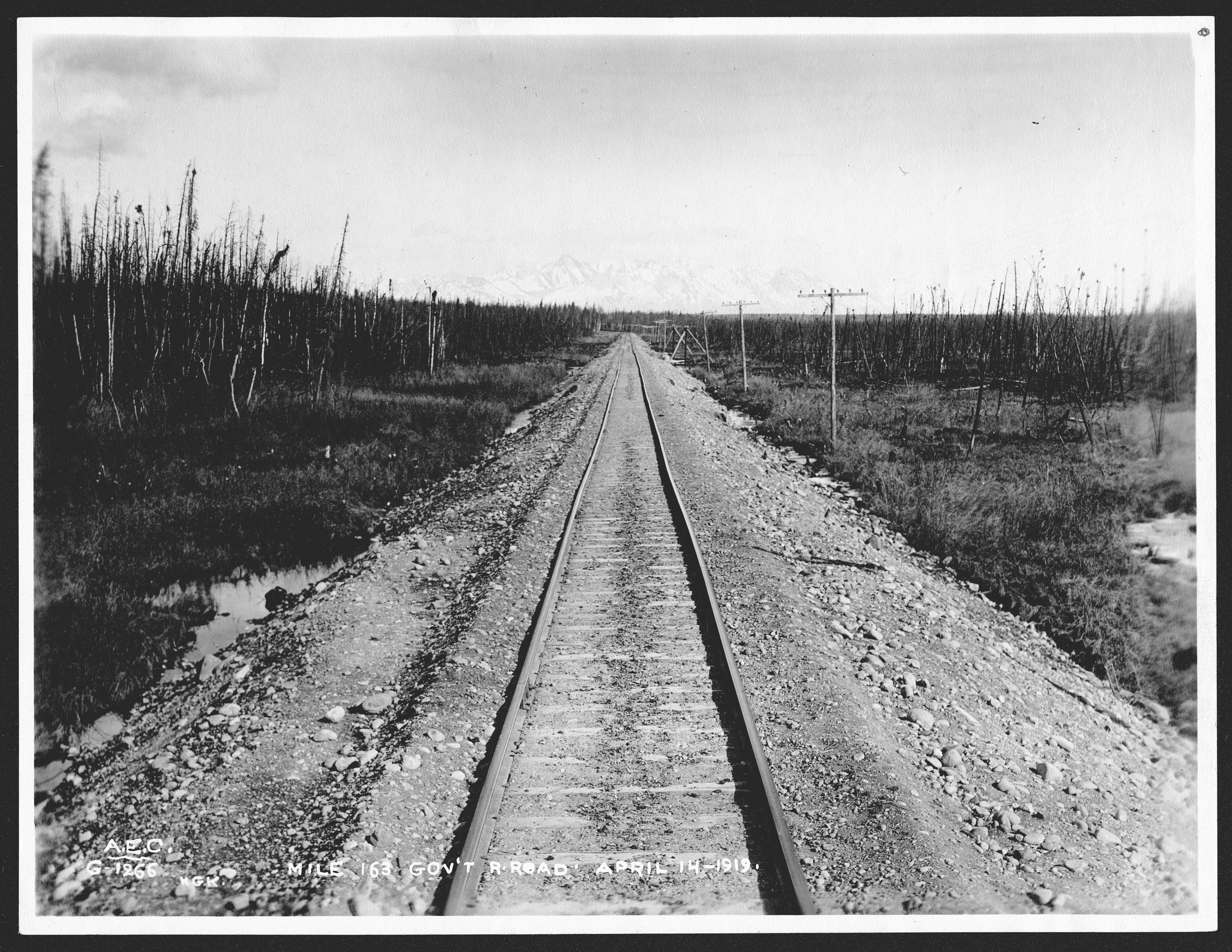
Print Photograph; [large work crew laying track, pulling equipment with ropes. Cf. .251], Alaska Railroad - Matanuska to Caswell, Wasilla . Front reads: A.E.C G-1266 H.G.K. Mile 163 Gov’t R.Road, April 14, 1919.


Attribution-NonCommercial-NoDerivatives 4.0 International (CC BY-NC-ND 4.0)
Print Photograph; [large work crew laying track, pulling equipment with ropes. Cf. .251], Alaska Railroad - Matanuska to Caswell, Wasilla . Front reads: A.E.C G-1266 H.G.K. Mile 163 Gov’t R.Road, April 14, 1919.
The development of the Alaska Railroad brought significant and lasting changes to the traditional homelands of the Ahtna people. While often described as a project intended to connect communities across the state, its construction followed routes long established by Indigenous travel and trade networks, transforming these pathways into corridors of industrial expansion.
The railroad introduced an influx of non-Native populations and large-scale development that altered the land in profound ways. Areas that had sustained Ahtna subsistence lifeways for generations experienced environmental disruption, including land disturbance, pollution, and, in some places, the diversion of waterways that affected salmon populations—an essential source of food, culture, and continuity for the community.
These changes impacted not only the physical landscape but also the relationships between people, land, and resources that have long guided Ahtna ways of life. Despite these disruptions, Ahtna people have continued to adapt, maintain cultural practices, and uphold responsibilities to their homelands.
Today, the work of Chickaloon Village Traditional Council’s Environmental Stewardship Department reflects these enduring relationships. Their efforts focus on protecting and restoring the land and waters, addressing the impacts of past development, and ensuring that future generations can continue to live in connection with their ancestral lands.
The Matanuska Branch of the Alaska Railroad lies within the ancestral homelands of the Idlughet Qayeht’ana (Eklutna Village Dena’ina), Knik Tribe (Dena'ina), and Nay'dini'aa Na' Kayax (Chickaloon Native Village). Although these lands were never ceded and are no longer under the legal ownership of any of the Tribes, they, along with the broader Dena'ina and Ahtna communities, work collaboratively to ensure these lands are responsibly stewarded and that their history is appropriately acknowledged.
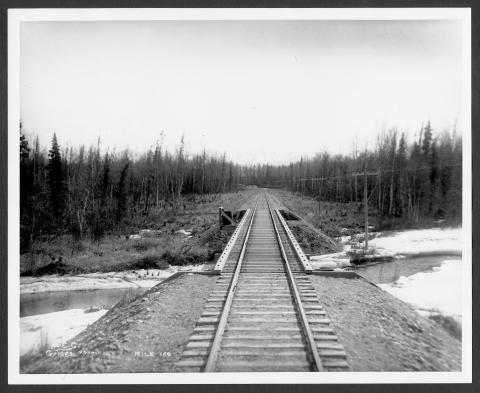
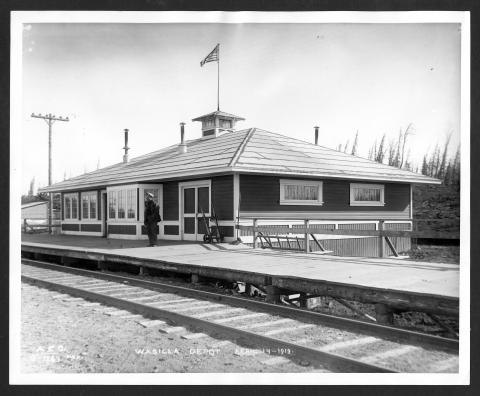

Attribution-NonCommercial-NoDerivatives 4.0 International (CC BY-NC-ND 4.0)