Bluff Cleared Below Talkeetna
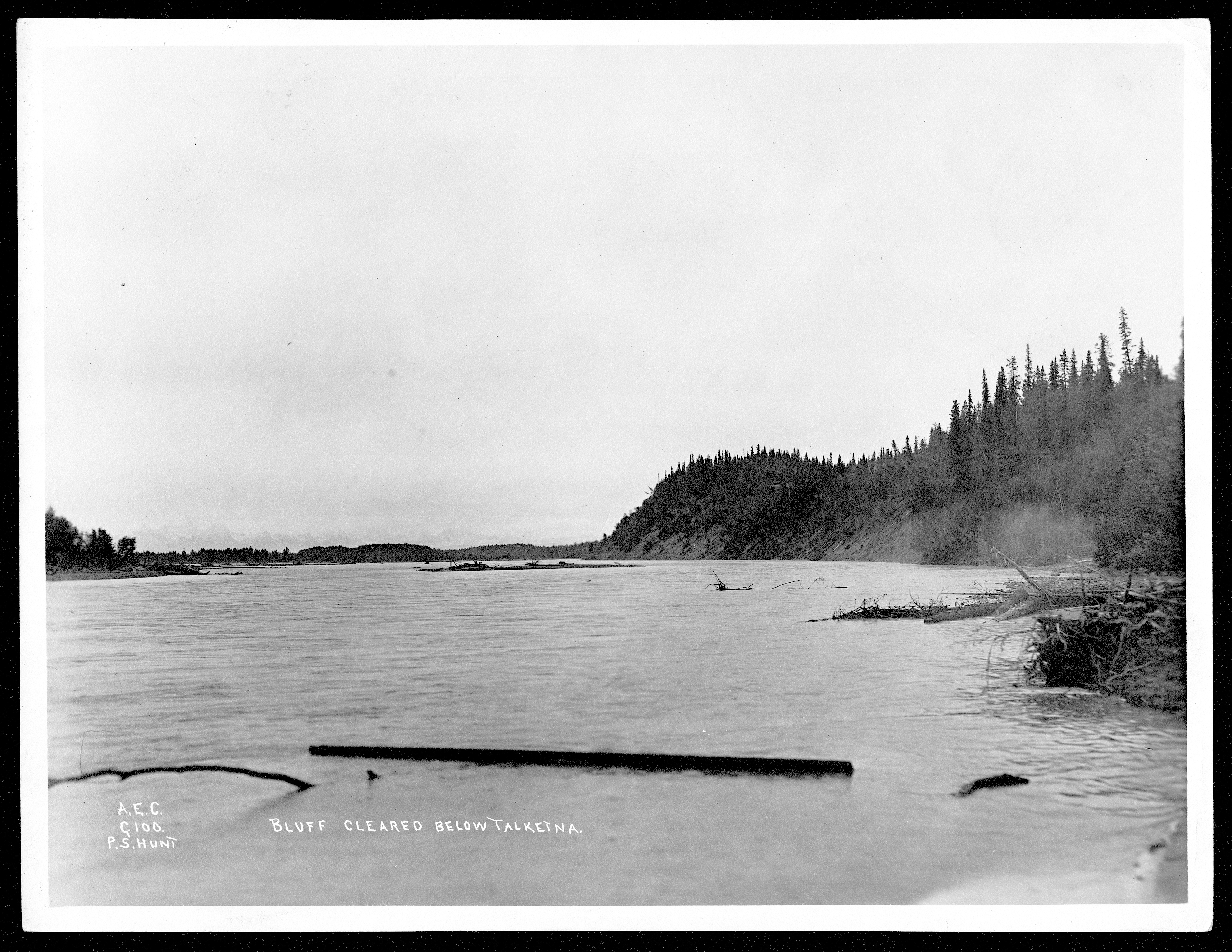
Print Photograph, Alaska Railroad - Caswell to Curry, Fishlake. [view down river near Talkeetna]. Front reads: AEC G100 P.S. Hunt. Bluff cleared below Talketna [sic].


Attribution-NonCommercial-NoDerivatives 4.0 International (CC BY-NC-ND 4.0)
Print Photograph, Alaska Railroad - Caswell to Curry, Fishlake. [view down river near Talkeetna]. Front reads: AEC G100 P.S. Hunt. Bluff cleared below Talketna [sic].
The development of the Alaska Railroad brought significant and lasting changes to the traditional homelands of the Ahtna people. While often described as a project intended to connect communities across the state, its construction followed routes long established by Indigenous travel and trade networks, transforming these pathways into corridors of industrial expansion.
The railroad introduced an influx of non-Native populations and large-scale development that altered the land in profound ways. Areas that had sustained Ahtna subsistence lifeways for generations experienced environmental disruption, including land disturbance, pollution, and, in some places, the diversion of waterways that affected salmon populations—an essential source of food, culture, and continuity for the community.
These changes impacted not only the physical landscape but also the relationships between people, land, and resources that have long guided Ahtna ways of life. Despite these disruptions, Ahtna people have continued to adapt, maintain cultural practices, and uphold responsibilities to their homelands.
Today, the work of Chickaloon Village Traditional Council’s Environmental Stewardship Department reflects these enduring relationships. Their efforts focus on protecting and restoring the land and waters, addressing the impacts of past development, and ensuring that future generations can continue to live in connection with their ancestral lands.
Taa’i Na’ is the Ahtna Athabascan name for the Talkeetna River. The surrounding area, including the Talkeetna Mountains, is referred to in Ahtna as Dghelaay tahwt’aene, reflecting Ahtna relationships to this landscape through travel, seasonal movement, and resource use. The place name “Talkeetna” is derived from the Dena’ina language and is commonly translated as “river of plenty” or “food is stored river,” referencing the area’s longstanding importance as a site of abundance, particularly for fishing and food storage. For both Ahtna and Dena’ina peoples, this region holds cultural significance as part of interconnected homelands supporting subsistence practices, trade networks, and enduring ties to land and water.

Attribution-NonCommercial-NoDerivatives 4.0 International (CC BY-NC-ND 4.0)